-
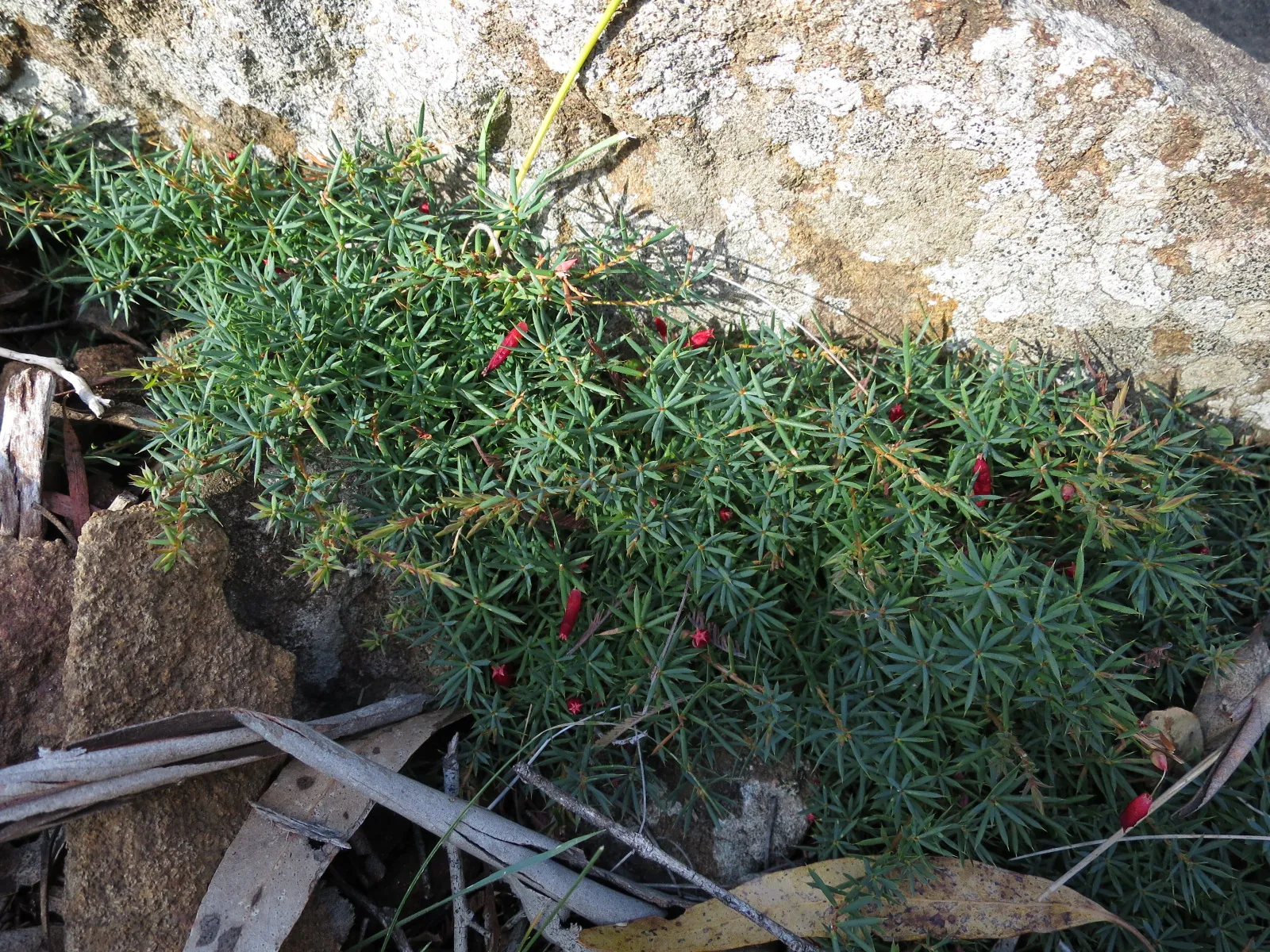 Image Credit: Anna Povey – with permission
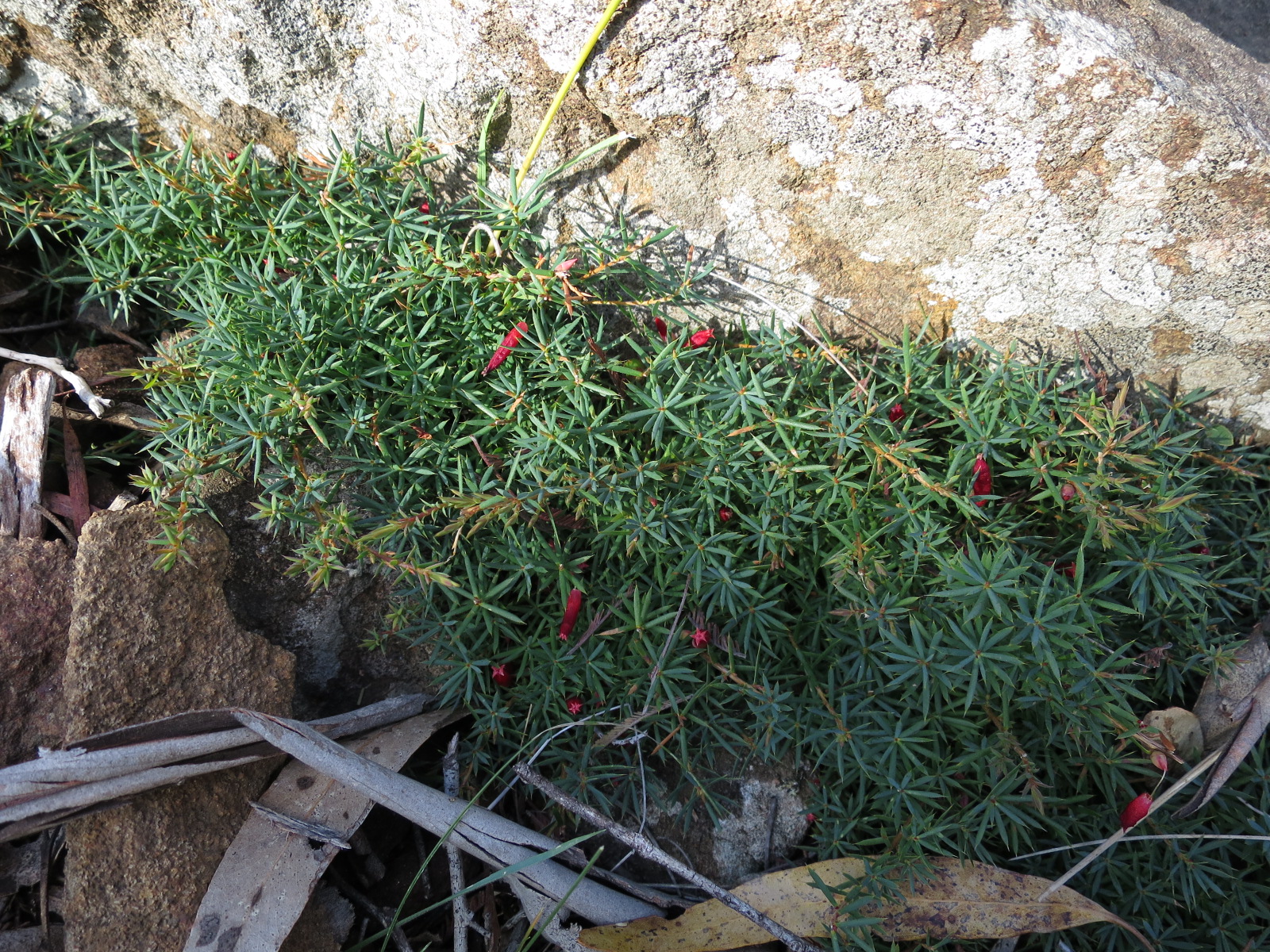
Scientific Name: Styphelia humifusa
Common Name: native cranberry
Family Classification (Clade): Eudicots
Family: Ericaceae
Form Description: Small much-branched shrub, usually prostrate and forming a small mat.
Flowers: Inconspicuous, red, tubular flowers partly hidden by the leaves.
Fruit: Seed is enclosed in a hard woody drupe covered with fleshy green layer; 8–10 mm long, ovoid; the flesh is sweet, edible.
Municipality
Plant Communities
Habitat Notes
Widespread and abundant in dry heaths and pastures.
Site Tolerance
Dry, Exposed, Moist, Rocky, Windy
Soil Tolerance
Fertile, Loam, Nutrient-poor, Sandy, Well-drained
General Notes
The fruits are sweet and edible. Susceptible to Phytophthora cinnamomi.
Propagation Calendar
-
Flowering Month
Jan Feb Mar Apr May Jun Jul Aug Sep Oct Nov Dec -
Seed Collecting Month
Jan Feb Mar Apr May Jun Jul Aug Sep Oct Nov Dec -
Sowing Month
Jan Feb Mar Apr May Jun Jul Aug Sep Oct Nov Dec -
Cutting Month
Jan Feb Mar Apr May Jun Jul Aug Sep Oct Nov Dec
Propagation Method
Seed Information
Seed Collection
Collect by hand.
Seed Treatment Method
Storage Stratification at 3-5°C for up to 3 months may improve results. Place seed in a damp medium, lightly covered. Put moist seeds in a plastic bag and store in the fridge.
Seed Treatment Notes
Difficult to grow from seed due to a complex dormancy. A range of treatments has been tried unsuccessfully. Sowing seed in soil collected from under parent plants may improve results.
Cutting & Division Information
Usually grown from cuttings, which is also difficult as suitable cutting wood is difficult to find. Roots are very fine so extreme care is needed when repotting. Firm young growth gives best results.