-
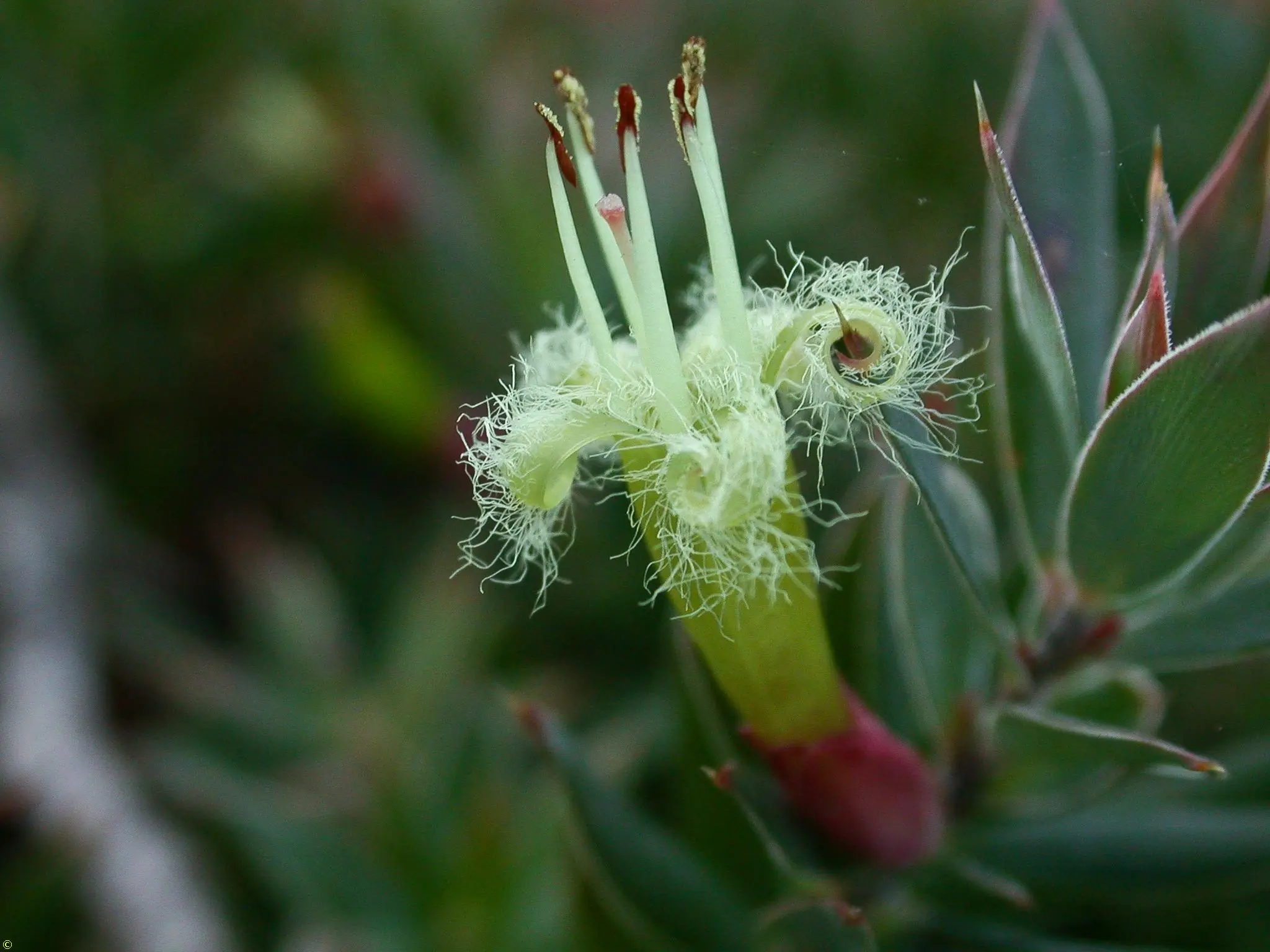 Image Credit: Rob Wiltshire – Natural Values Atlas
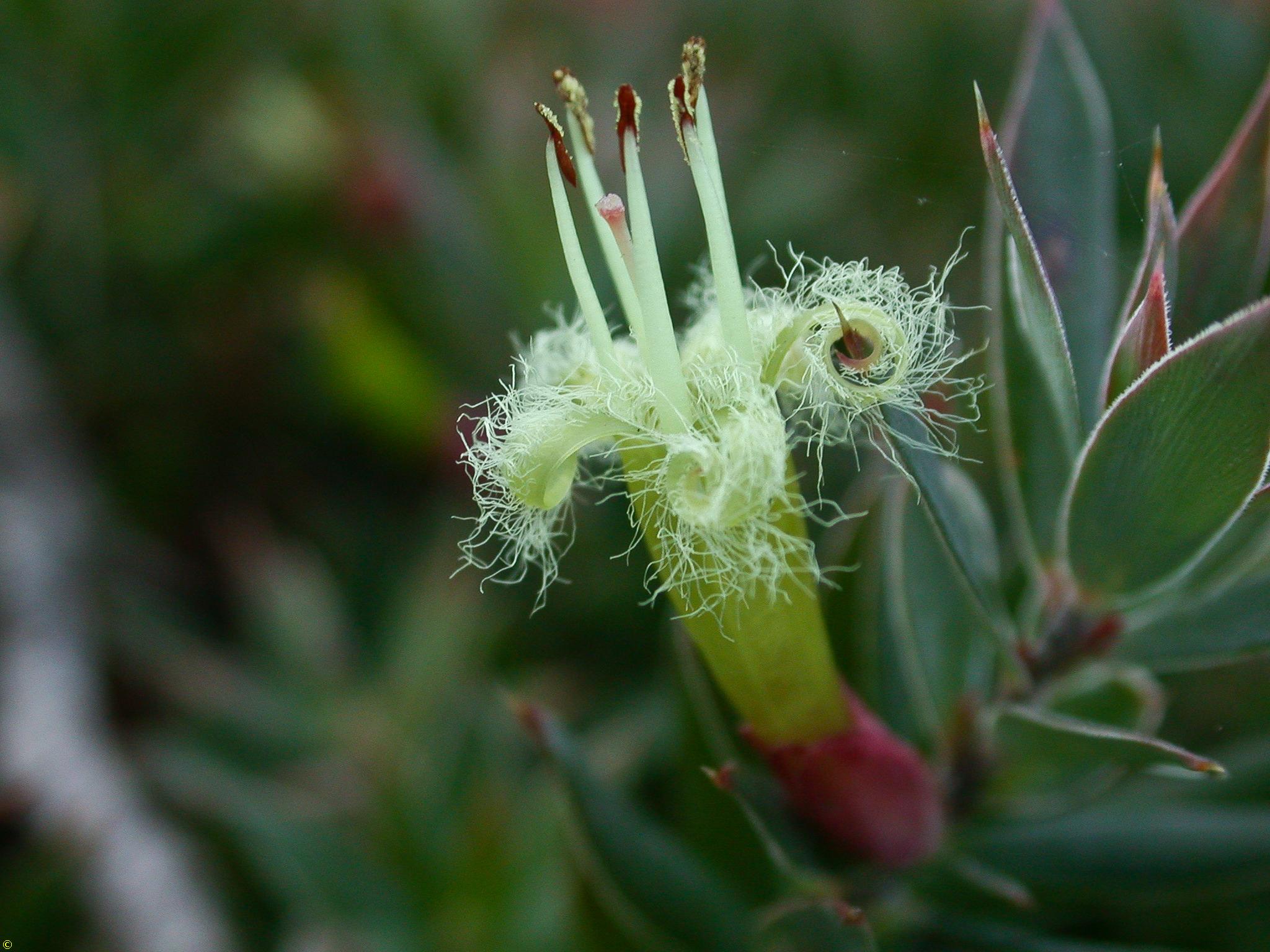
Scientific Name: Styphelia adscendens
Common Name: golden heath
Family Classification (Clade): Eudicots
Family: Ericaceae
Form Description: Small shrub, branches ascending or prostrate forming a mat of flat leaves.
Height (m): 0.2 – 0.8
Flowers: Greenish-yellow tubular, fairly conspicuous flowers. Petals with hairy lobes.
Fruit: Drupe – a thin fleshy layer and stone with 5 or fewer sections, each with one seed.
Municipality
Plant Communities
Habitat Notes
Widespread and frequent in dry pastures and heaths. Scattered in districts mainly near the coast. Sometimes on dry sites, but also on damp peaty sites.
Site Tolerance
Dry, Exposed, Moist
Soil Tolerance
Fertile, Loam, Nutrient-poor, Well-drained
General Notes
A well-composted soil that is well-drained is essential and care should be taken to prevent plants from drying out. Some shade is desirable.
Propagation Calendar
-
Flowering Month
Jan Feb Mar Apr May Jun Jul Aug Sep Oct Nov Dec -
Seed Collecting Month
Jan Feb Mar Apr May Jun Jul Aug Sep Oct Nov Dec -
Sowing Month
Jan Feb Mar Apr May Jun Jul Aug Sep Oct Nov Dec -
Cutting Month
Jan Feb Mar Apr May Jun Jul Aug Sep Oct Nov Dec
Propagation Method
Seed Information
Seed Collection
Collect individually by hand. Flesh does not need to be cleaned off, just sieve, clean and dry thoroughly.
Seed Treatment Method
Standard Scatter seed thinly on to damp potting mix. Hold seed in place by covering with more potting mix to approximately the depth of the seed size.
Seed Treatment Notes
Difficult to grow from seed but some success has been reported.
Germination Time
Several weeks
Cutting & Division Information
Cuttings strike with difficulty as good wood is often hard to find. Particular care should be taken when handling because they develop long, fine roots.