-
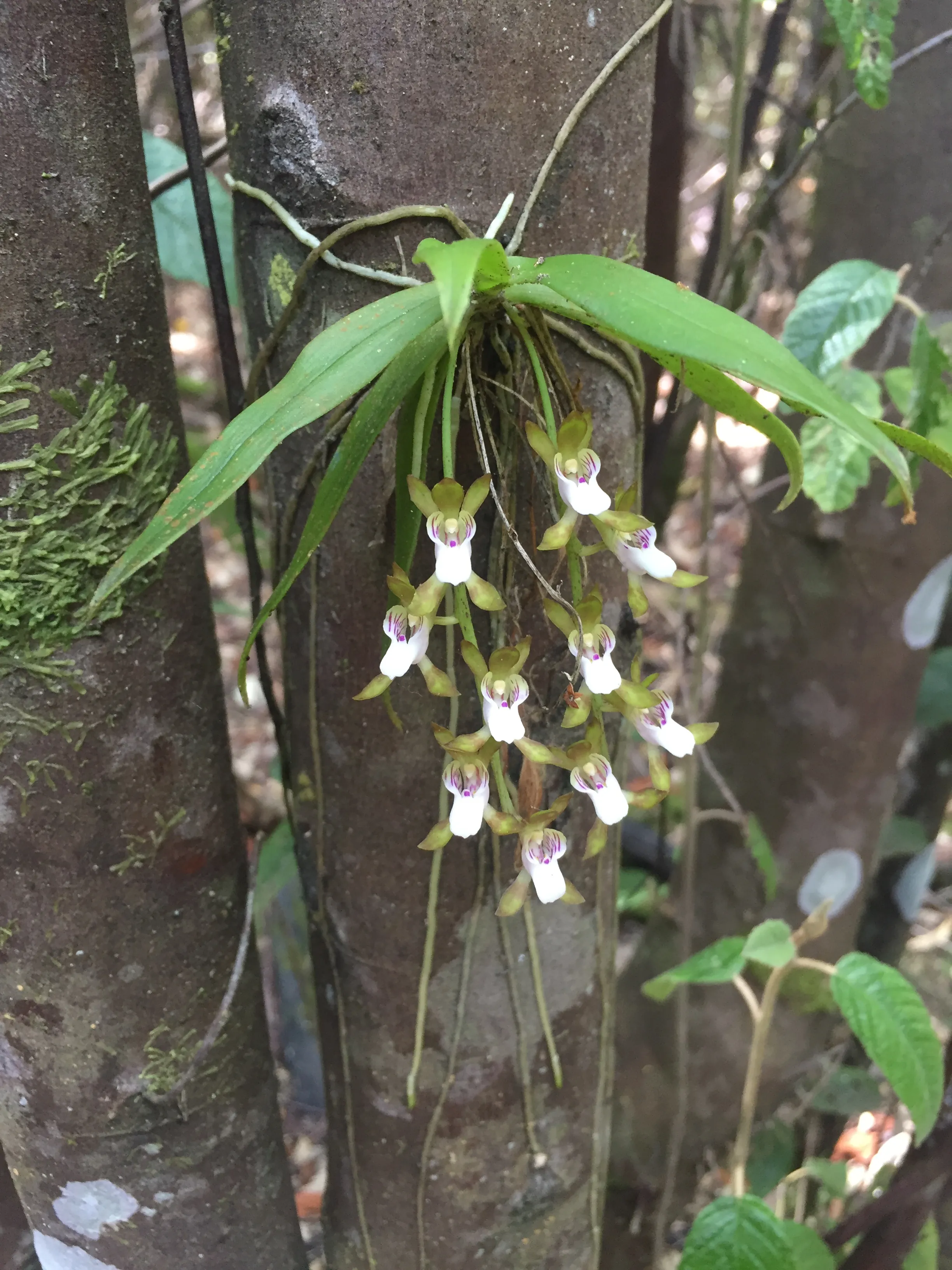 Image Credit: Anna Povey – with permission
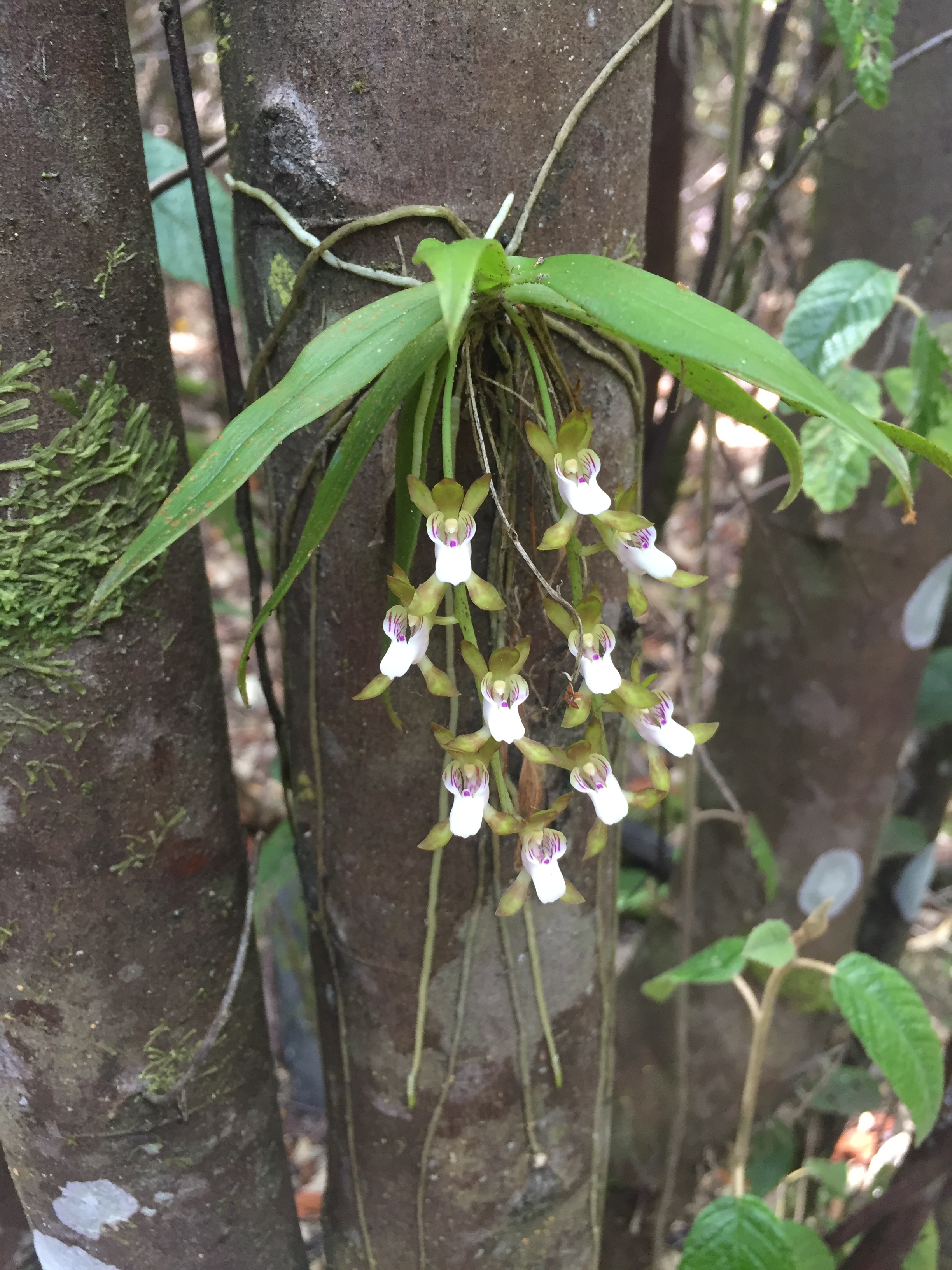
Scientific Name: Sarcochilus australis
Common Name: gunns tree-orchid
Family Classification (Clade): Monocots
Family: Orchidaceae
Form Description: A small, pendulous, epiphytic orchid, with a tuft of 3-10 linear leathery, dark-green leaves and long roots.
Height (m): 0.05 – 0.1
Flowers: Pendulous racemes of 2-14 sweetly fragrant pale green or brown flowers; lateral sepals are brilliant white externally with mauve stripes internally, forming a pouch below the labellum.
Municipality
Plant Communities
Habitat Notes
Most commonly found in sheltered, shady and permanently moist gullies, where it grows on a range of shrubs and trees, usually at about eye level, but also in rainforest and other moist forest types. It is occasionally found on low boulders. Cannot tolerate dry conditions and consequently is threatened by both habitat clearance and climate change. Widely scattered but locally fairly common in coastal and near coastal lowland in the east, central north and north-west, and in the Furneaux Group.
Site Tolerance
Moist, Shady, Waterlogged
Soil Tolerance
Clay, Fertile, Loam, Nutrient-poor, Poorly-drained, Sandy
Frost Tolerance
Tender
Propagation Calendar
-
Flowering Month
Jan Feb Mar Apr May Jun Jul Aug Sep Oct Nov Dec -
Seed Collecting Month
Jan Feb Mar Apr May Jun Jul Aug Sep Oct Nov Dec -
Sowing Month
Jan Feb Mar Apr May Jun Jul Aug Sep Oct Nov Dec -
Cutting Month
Jan Feb Mar Apr May Jun Jul Aug Sep Oct Nov Dec
Propagation Method
Seed Information
Seed Treatment Notes
Orchid seeds are very minute yellow, brown or blackish dust-like particles. Orchid seeds are produced within a capsule that splits at maturity and releases thousands to millions of seeds. Dispersed by wind and water and only germinate following infection of the embryo by a suitable mycorrhizal fungus. Very few seeds become mature plants. For more information see Jones, Wapstra, Tonelli, Harris (1999): The Orchids of Tasmania.