-
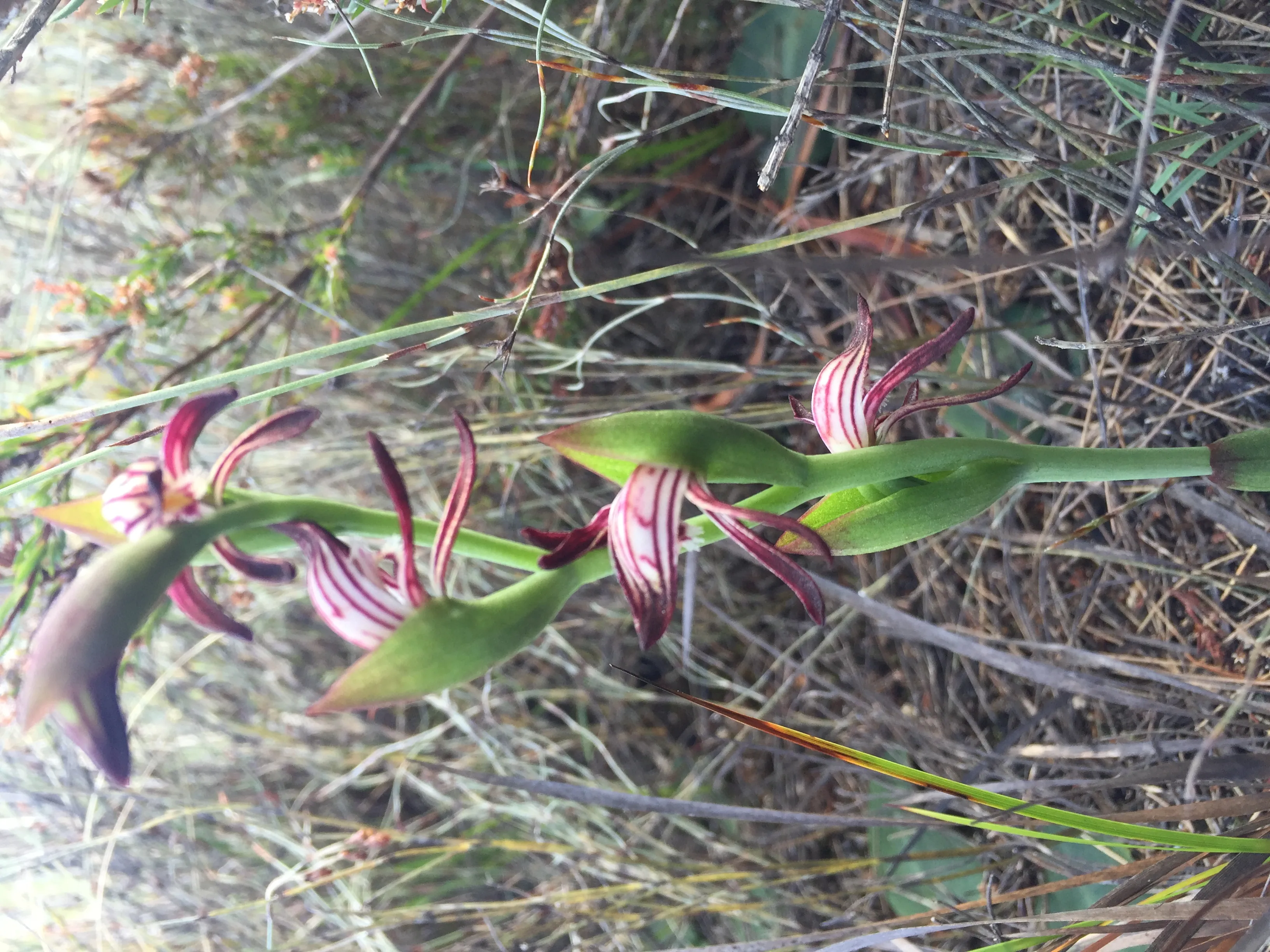 Image Credit: Anna Povey – with permission
-
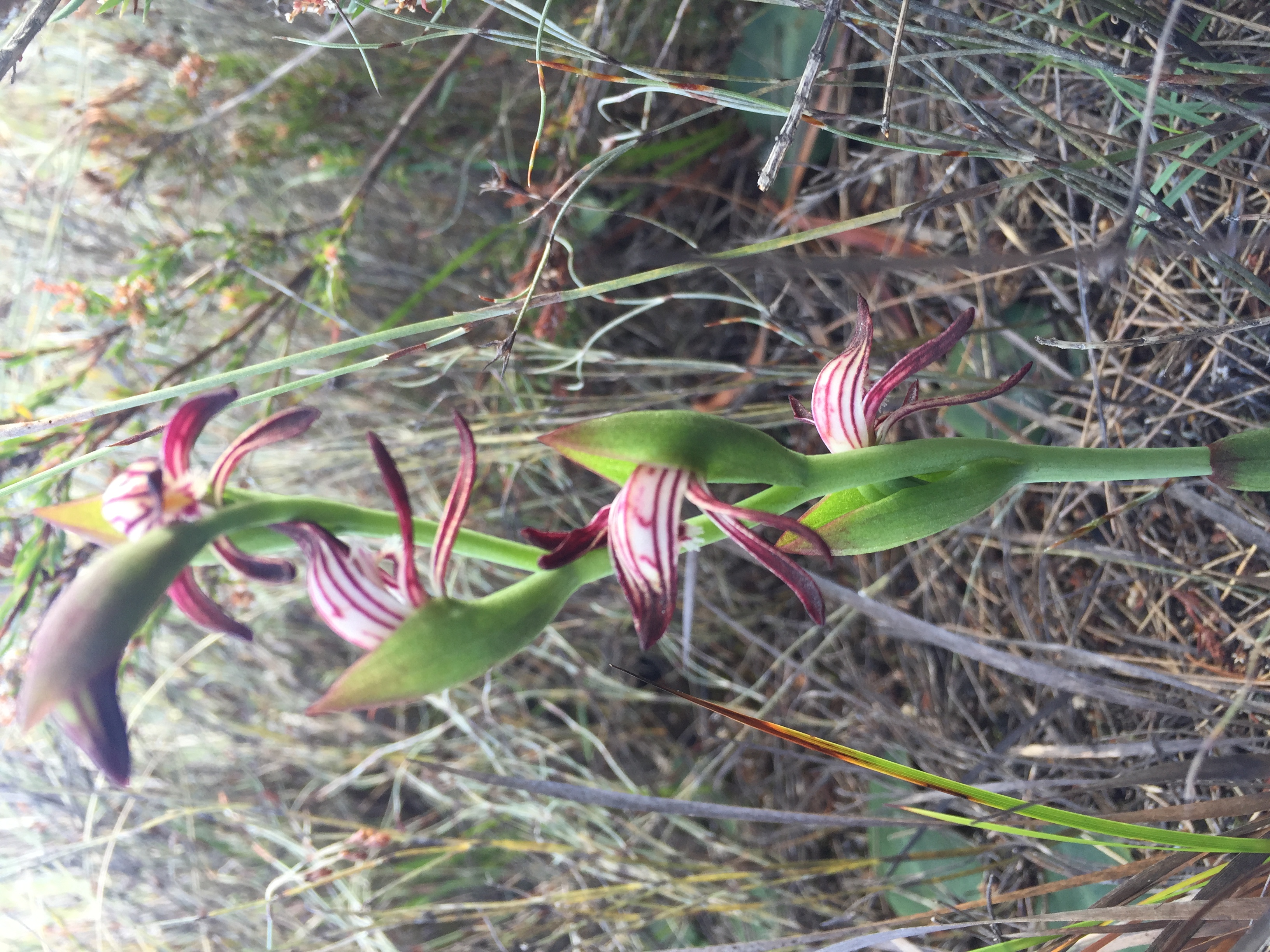
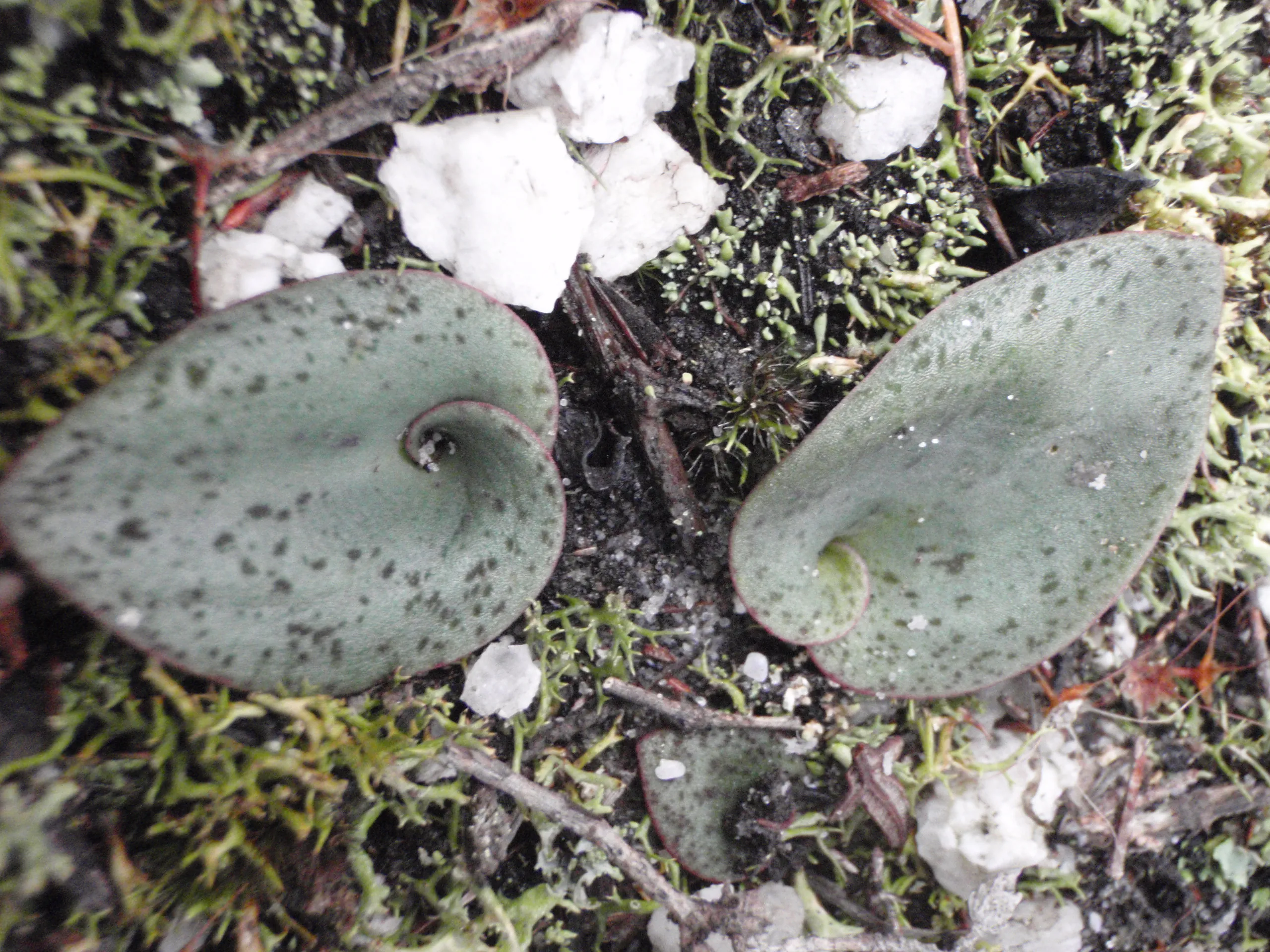 Image Credit: Anna Povey – with permission
Scientific Name: Pyrorchis nigricans
Common Name: fire orchid
Family Classification (Clade): Monocots
Family: Orchidaceae
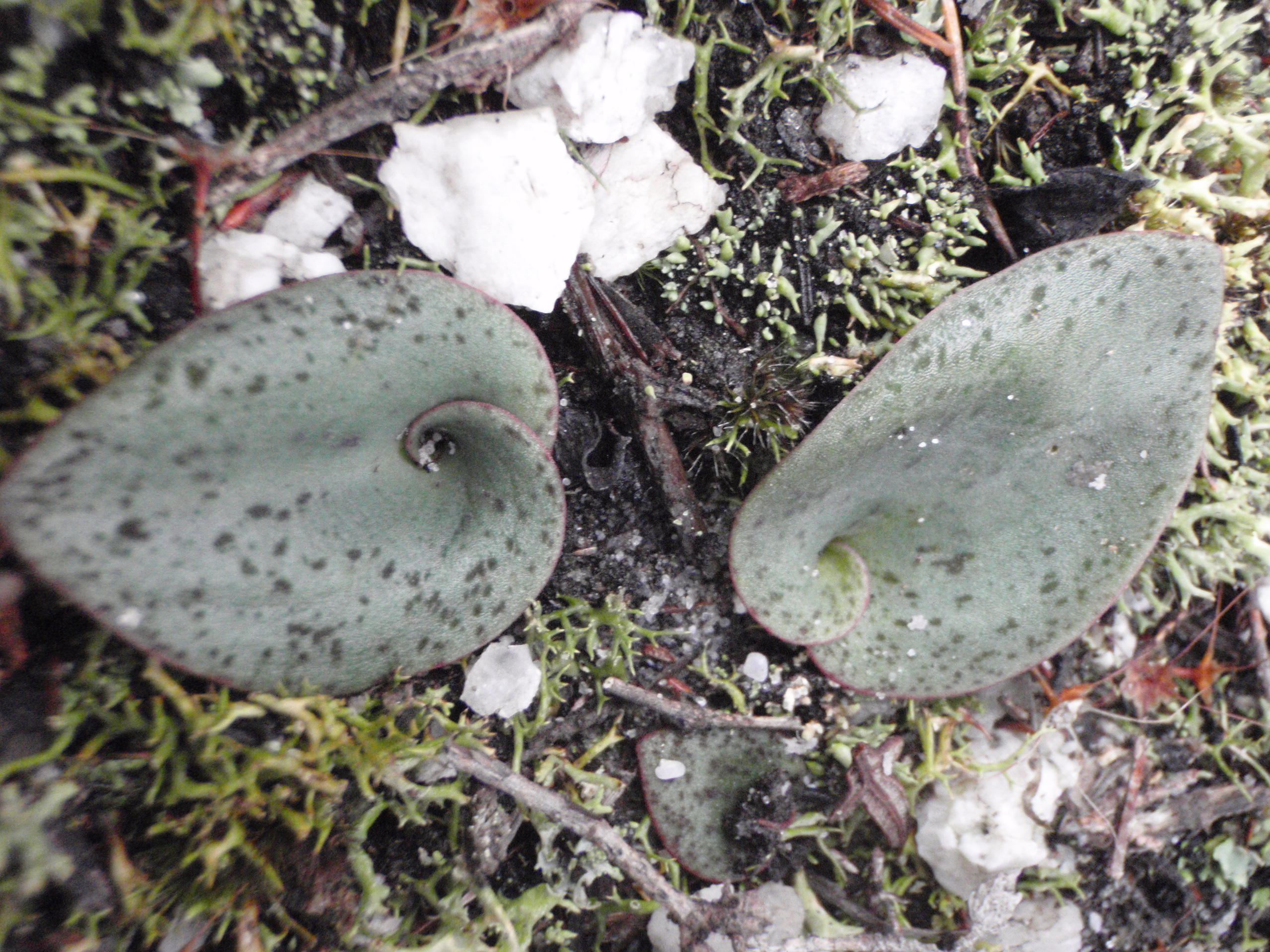
Form Description: Colony forming orchid with a large fleshy heart-shaped ground-hugging basal leaf. The plants turn black on drying.
Height (m): 0.05 – 0.3
Flowers: Up to 8 flowers, 2-3cm across, white with prominent dark reddish stripes; large strongly hooded dorsal sepal and a whitish deeply fringed labellum.
Municipality
Plant Communities
Habitat Notes
Heathy eucalypt woodland, teatree scrub, sedgeland and heathland on moderately to well-drained sandy soils. Widespread and locally abundant in coastal and near coastal lowland on the Tasman Peninsula and in northern Tasmania, including Bass Strait Is. In most areas plants flower only in the season following summer fire.
Site Tolerance
Dry, Exposed
Soil Tolerance
Nutrient-poor, Sandy, Well-drained
Frost Tolerance
Tender
Propagation Calendar
-
Flowering Month
Jan Feb Mar Apr May Jun Jul Aug Sep Oct Nov Dec -
Seed Collecting Month
Jan Feb Mar Apr May Jun Jul Aug Sep Oct Nov Dec -
Sowing Month
Jan Feb Mar Apr May Jun Jul Aug Sep Oct Nov Dec -
Cutting Month
Jan Feb Mar Apr May Jun Jul Aug Sep Oct Nov Dec
Propagation Method
Seed Information
Seed Treatment Notes
Orchid seeds are very minute yellow, brown or blackish dust-like particles. Orchid seeds are produced within a capsule that splits at maturity and releases thousands to millions of seeds. Dispersed by wind and water and only germinate following infection of the embryo by a suitable mycorrhizal fungus. Very few seeds become mature plants. For more information see Jones, Wapstra, Tonelli, Harris (1999): The Orchids of Tasmania.