-
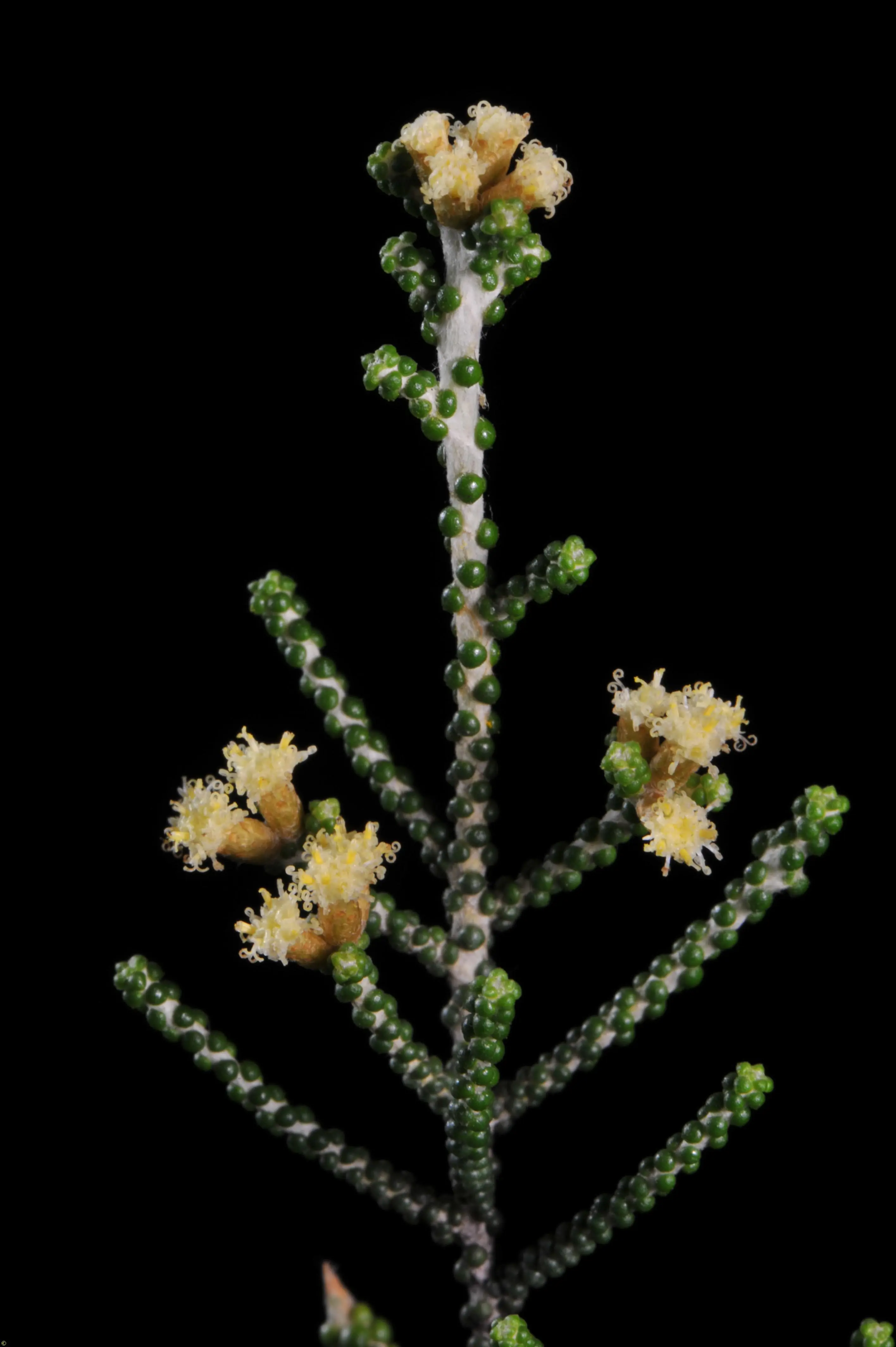 Image Credit: Rob Wiltshire – Natural Values Atlas
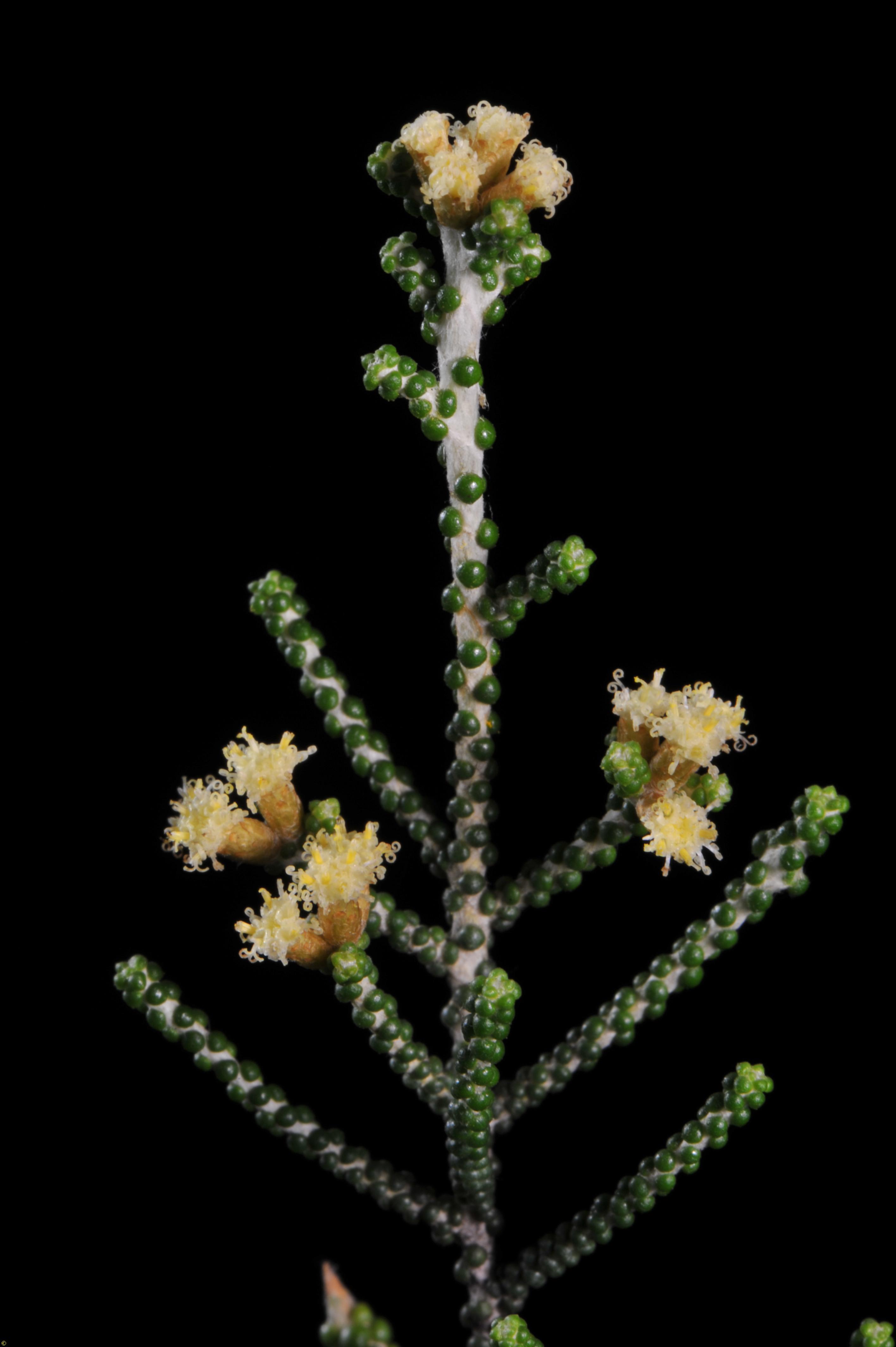
Scientific Name: Ozothamnus scutellifolius Endemic Having a natural distribution confined to a particular geographic region
Common Name: buttonleaf everlastingbush
Family Classification (Clade): Eudicots
Family: Asteraceae
Form Description: Shrub, many branches. Tiny dark green leaves closely pressed to stems.
Height (m): 0.3 – 1
Flowers: Heads 3-5 together at end of branch; yellowish white with brownish outer, 4mm long.
Fruit: Achene – seed heads large, creamy and white.
Municipality
Plant Communities
Habitat Notes
Locally frequent on dry hillsides.
Site Tolerance
Dry, Exposed
Soil Tolerance
Fertile, Loam, Nutrient-poor, Sandy, Well-drained
Frost Tolerance
Hardy
General Notes
“Now that Ozothamnus has been divided from Helichrysums we are calling Ozothamnus ‘Bush Everlasting’ as Helichrysums were always known as ‘Everlastings’ ” – Will Fletcher.
Propagation Calendar
-
Flowering Month
Jan Feb Mar Apr May Jun Jul Aug Sep Oct Nov Dec -
Seed Collecting Month
Jan Feb Mar Apr May Jun Jul Aug Sep Oct Nov Dec -
Sowing Month
Jan Feb Mar Apr May Jun Jul Aug Sep Oct Nov Dec -
Cutting Month
Jan Feb Mar Apr May Jun Jul Aug Sep Oct Nov Dec
Propagation Method
Seed Information
Seed Collection
Easily grown from seed. Seed heads become dry and break up when seed is ripe. Shake branch and seed will fall to ground. Store in paper bags. Seed heads contain many small seeds. Break up and sieve.
Seed Treatment Method
Surface Sow Sow seed finely on the surface of the potting mix and cover with just enough mix to hold the seed on the surface when watered.
Seed Storage Life
Short
Seed Treatment Notes
Easily grown from seed. Surface sow or cover lightly.
Cutting & Division Information
Firm young growth will strike with bottom heat.