-
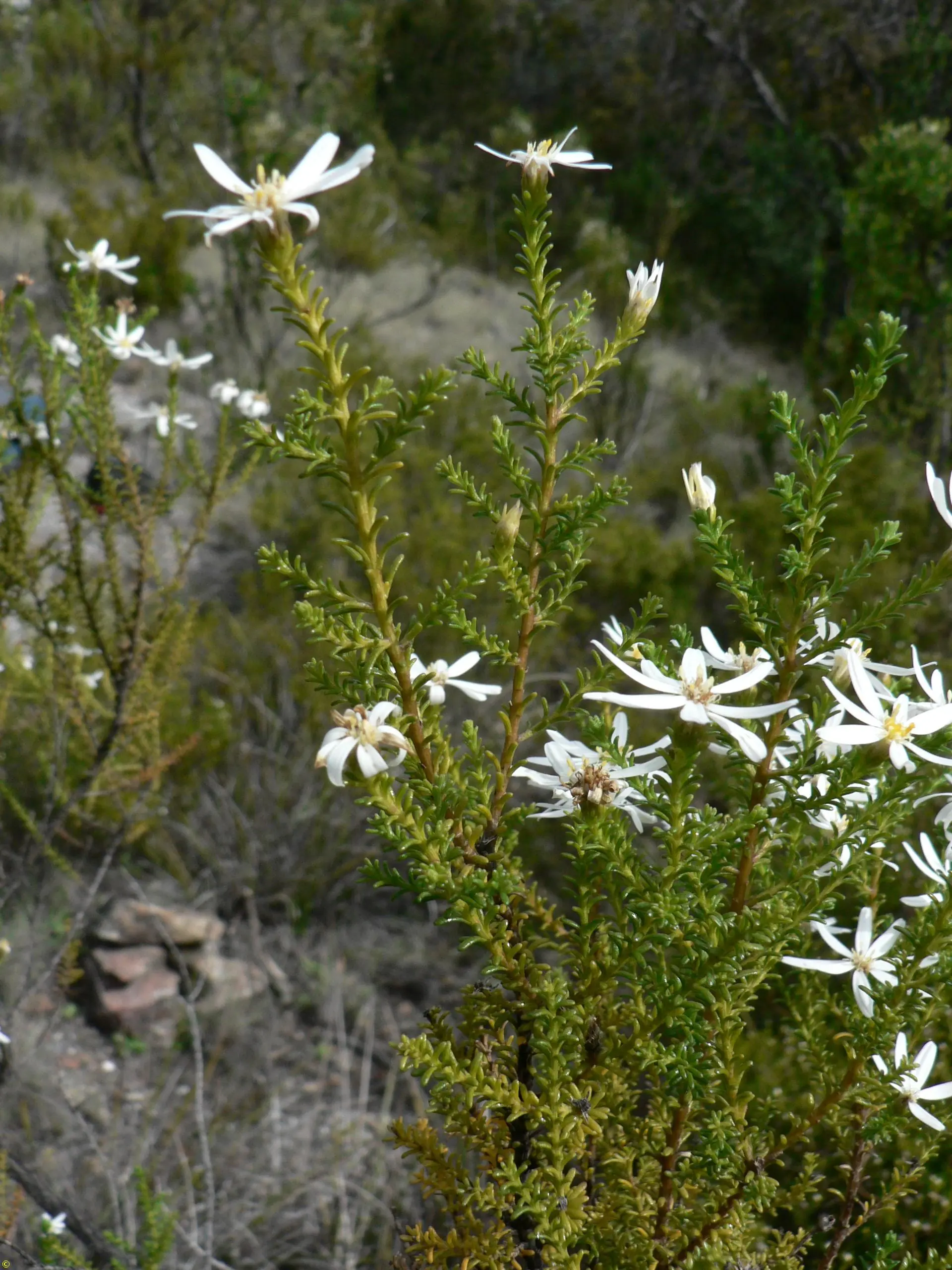 Image Credit: Micah Visoiu – Natural Values Atlas
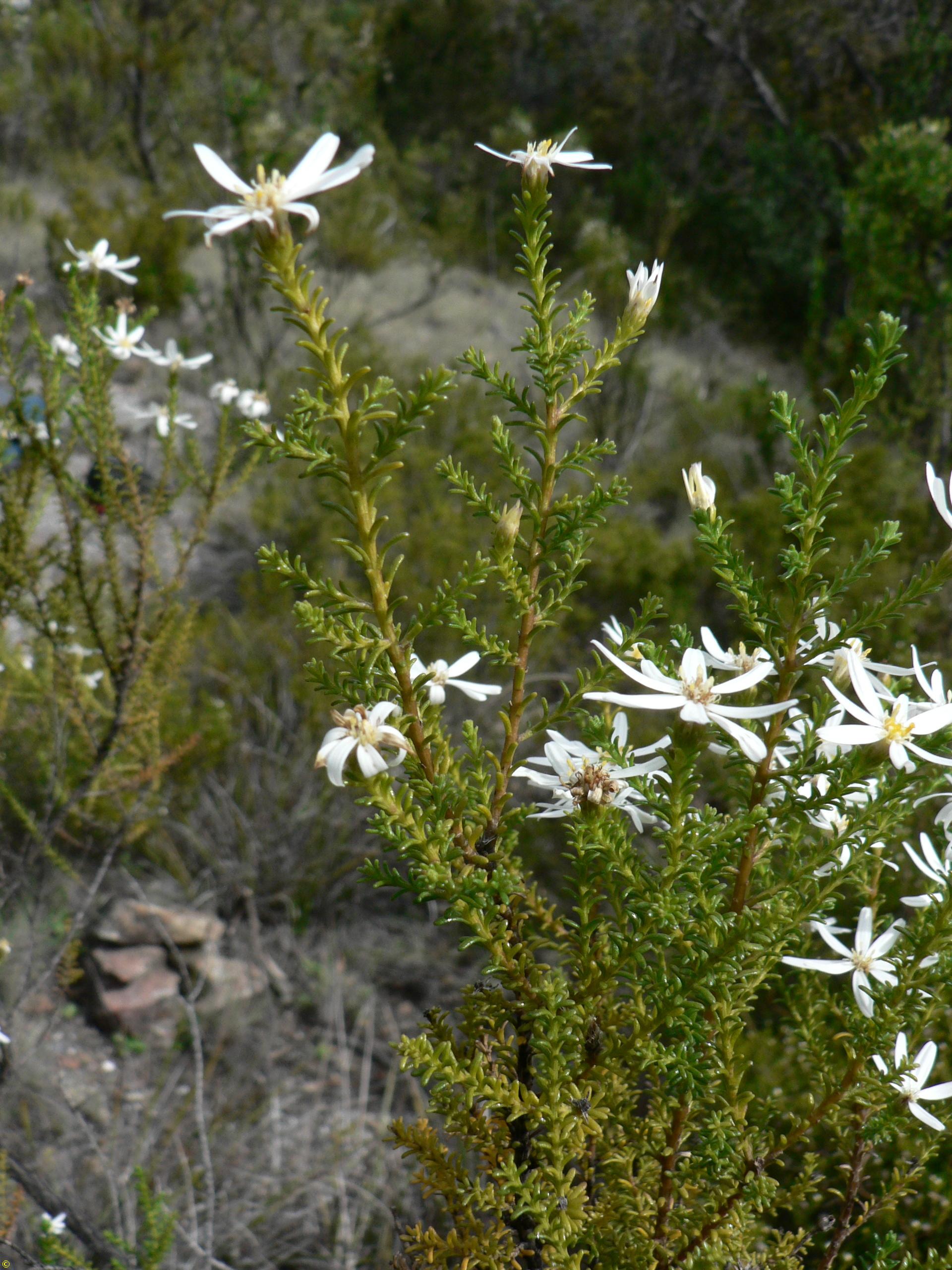
Scientific Name: Olearia hookeri Endemic Having a natural distribution confined to a particular geographic region
Common Name: crimsontip daisybush
Family Classification (Clade): Eudicots
Family: Asteraceae
Threatened Species Status: Rare
Permit: It is an offence to collect, disturb, damage or destroy this species unless under permit.
Form Description: A slender, sticky shrub, apparently hairless (but with tiny glandular hairs).
Height (m): 0.6 – 1
Flowers: Flower heads usually solitary without stalks. Florets usually bluish-purple 20-30.
Fruit: Achene, hairy, pappus in young flowers purplish at the tips, light brown when dry.
Municipality
Plant Communities
Habitat Notes
Occasional in the east and south-east near Hobart.
Site Tolerance
Dry, Shady
Soil Tolerance
Fertile, Loam, Well-drained
Frost Tolerance
Hardy
General Notes
Bird attracting. Resistant to Phytophthora cinnamomi.
Propagation Calendar
-
Flowering Month
Jan Feb Mar Apr May Jun Jul Aug Sep Oct Nov Dec -
Seed Collecting Month
Jan Feb Mar Apr May Jun Jul Aug Sep Oct Nov Dec -
Sowing Month
Jan Feb Mar Apr May Jun Jul Aug Sep Oct Nov Dec -
Cutting Month
Jan Feb Mar Apr May Jun Jul Aug Sep Oct Nov Dec
Propagation Method
Seed Information
Seed Collection
When seed is mature the achenes loosen in the centre of the seed heads which appear fluffy. Collect into paper bags and allow to dry. Rub and sieve seed.
Seed Treatment Method
Surface Sow Sow seed finely on the surface of the potting mix and cover with just enough mix to hold the seed on the surface when watered.
Seed Storage Life
Short
Seed Treatment Notes
For best results fresh seed should be used. Seed should be surface sown or covered lightly. Little viable seed produced by some species.
Germination Time
2-5 weeks
Cutting & Division Information
Can be propagated from cuttings of firm young growth.