-
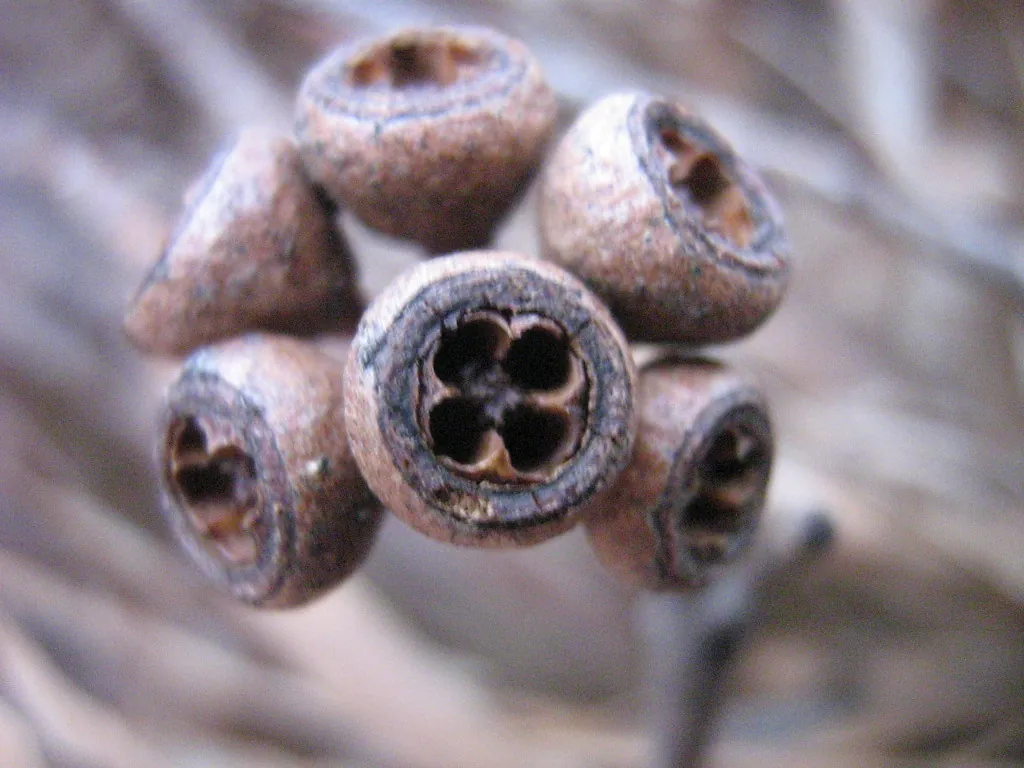 Image Credit: Anna Povey – with permission
-
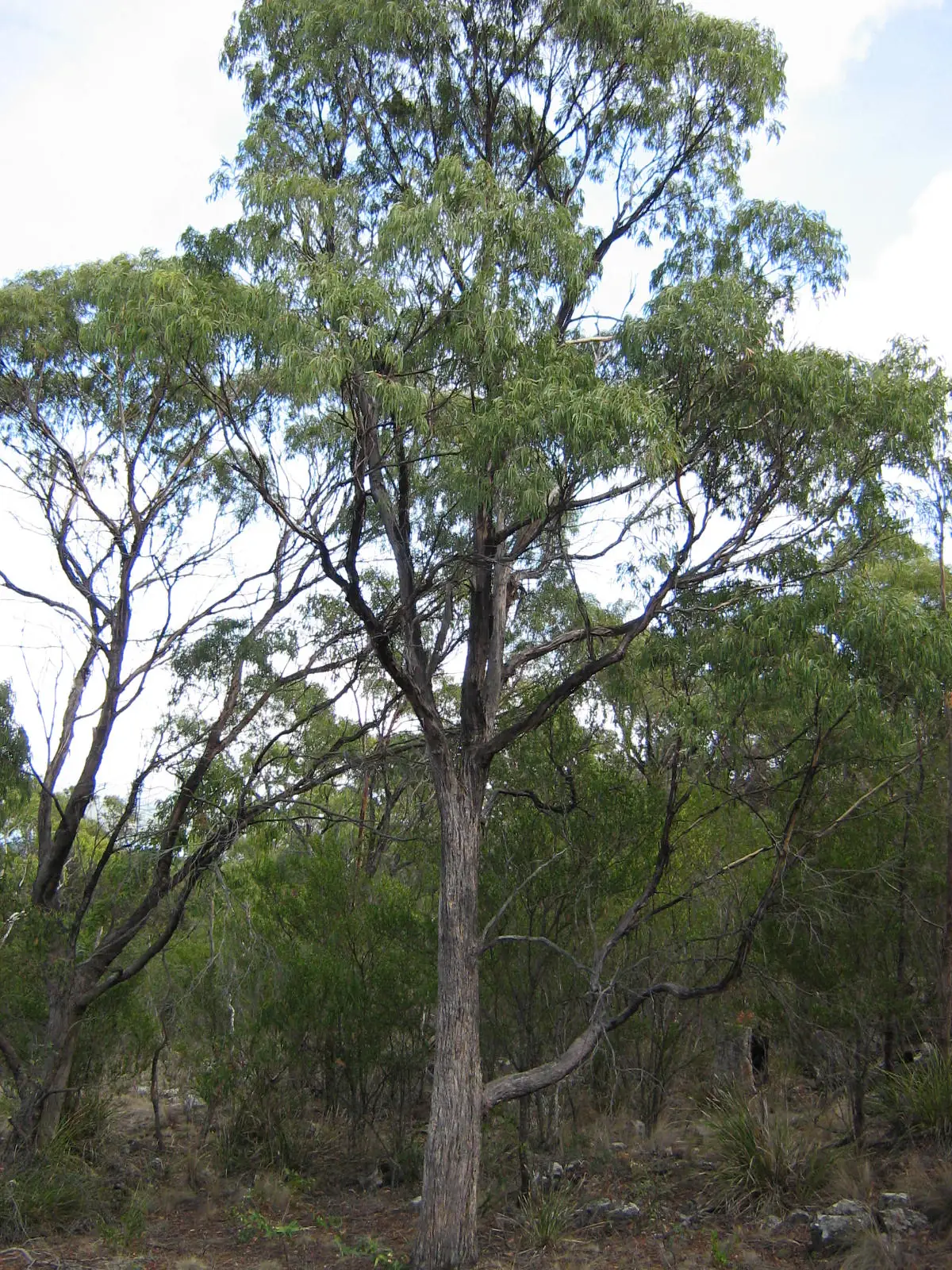 Image Credit: Anna Povey – with permission
-
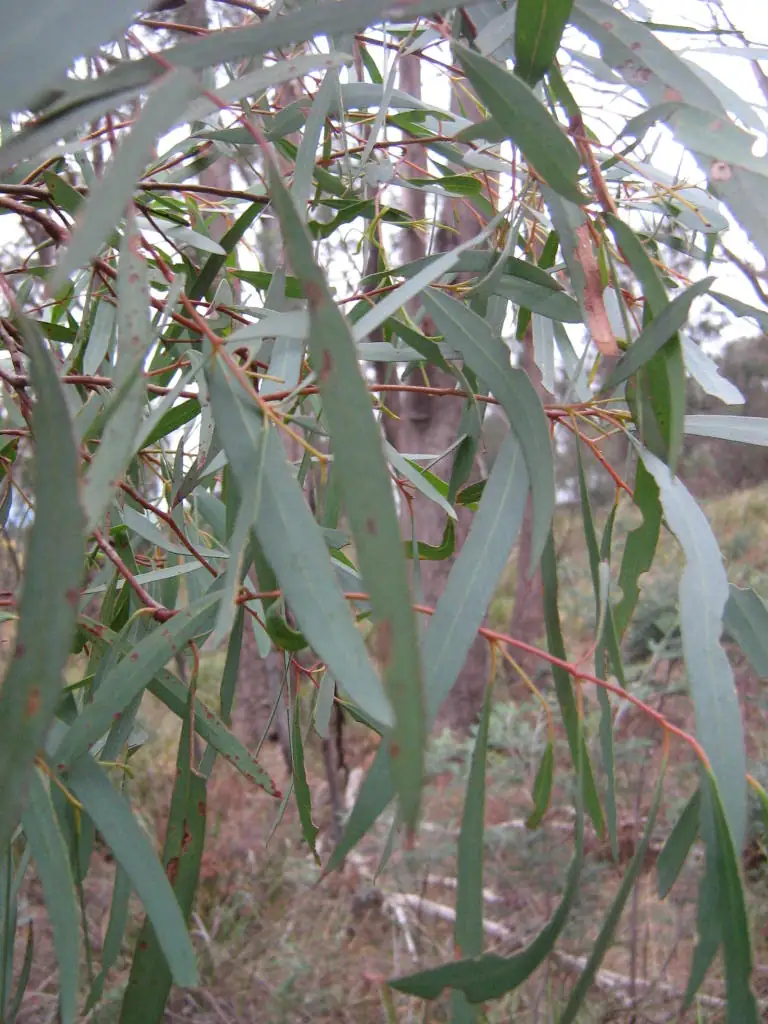 Image Credit: Anna Povey – with permission
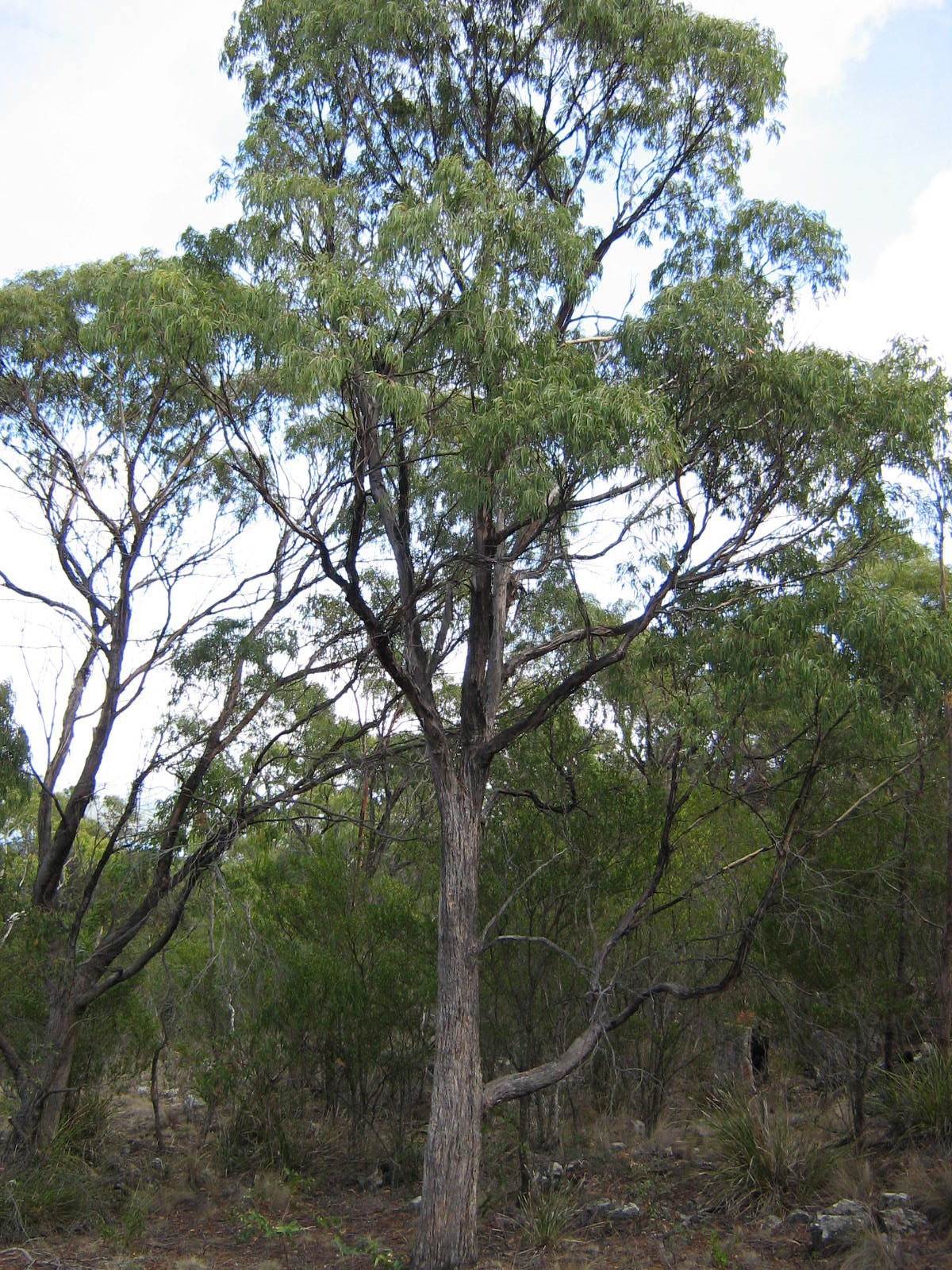
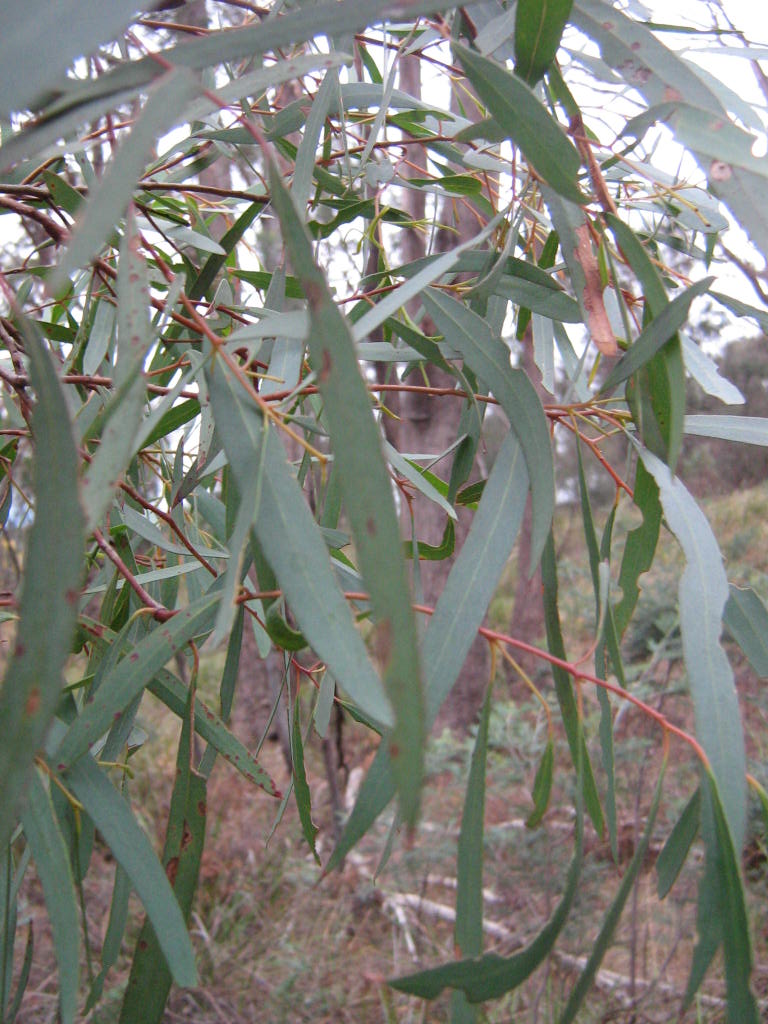
Scientific Name: Eucalyptus amygdalina Endemic Having a natural distribution confined to a particular geographic region
Common Name: black peppermint
Family Classification (Clade): Eudicots
Family: Myrtaceae
Form Description: Small trees with mallee habit or tall tree. Leaves: Juvenile – narrow, dull green. Adult narrow (8-10 mm), green to sub-glaucous. Bark: Rough, fibrous, usually dark grey and often charred.
Height (m): 6 – 30
Flowers: Umbel with 11-20 flowers.
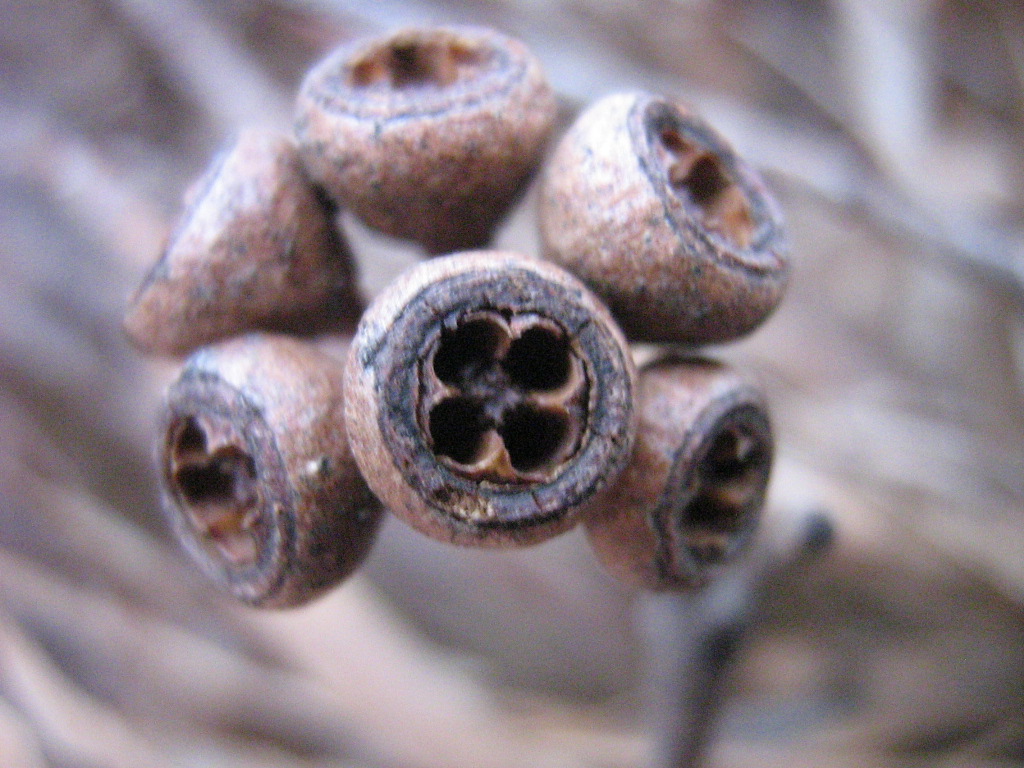
Fruit: Woody capsule – cup-shaped; disc is more or less level.
Municipality
Plant Communities
Site Tolerance
Dry, Exposed, Moist, Rocky, Windy
Soil Tolerance
Fertile, Loam, Nutrient-poor, Sandy, Well-drained
Frost Tolerance
Hardy
General Notes
Tolerates shallow and poor acid soils. Bee attracting. Timber is durable in the ground and is used for fence posts. High flammability. Makes good firewood; easily split.
Propagation Calendar
-
Flowering Month
Jan Feb Mar Apr May Jun Jul Aug Sep Oct Nov Dec -
Seed Collecting Month
Jan Feb Mar Apr May Jun Jul Aug Sep Oct Nov Dec -
Sowing Month
Jan Feb Mar Apr May Jun Jul Aug Sep Oct Nov Dec -
Cutting Month
Jan Feb Mar Apr May Jun Jul Aug Sep Oct Nov Dec
Propagation Method
Seed Information
Seed Collection
To collect seed bring small branches to the ground and cut off capsules leaving twigs attached. Place in paper bags, wool bales or on groundsheets. Store until capsules open to release seed. Separate seed by sieving.
Seed Treatment Method
Cold Some species require exposure to cold before they germinate. These species are best sown in early winter and left to germinate in a shade house.
Seed Storage Life
More than 10 years dry stored in refrigerator at 3-5°C
Seed Treatment Notes
Suitable for direct seeding. Otherwise, stratification at 3-5°C for 4 weeks is recommended, but not essential.
Germination Time
2- 4 weeks
Cutting & Division Information
Impracticable